Inner Growth
Play Inner Growth
Inner Growth Screenshots
















Inner Growth review
Explore the narrative-driven experience where decisions shape your journey through two worlds
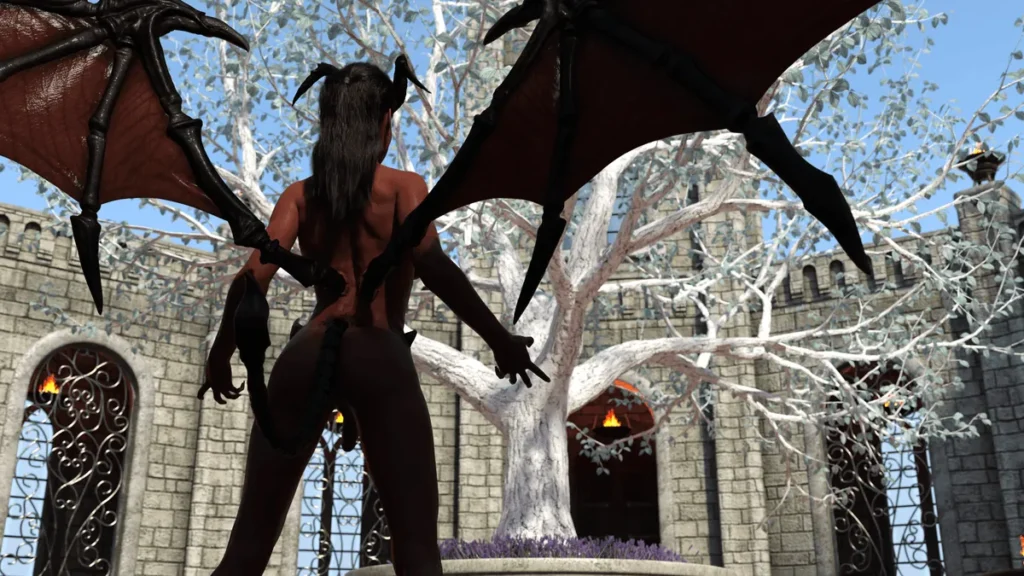
Inner Growth stands out as a narrative-driven visual novel that combines immersive storytelling with meaningful decision-making mechanics. Developed by Morally Purple, this game follows Thalna, a protagonist navigating between the underworld and human realm, where every choice carries weight and consequences. Unlike traditional games that feature superficial branching paths, Inner Growth integrates character development and relationship dynamics into its core gameplay. The game emphasizes personal growth and self-discovery through interactive storytelling, offering players multiple outcomes based on their decisions. With its focus on emotional intelligence and complex character interactions, Inner Growth delivers a unique experience for players seeking depth alongside engaging narrative content.
Understanding Inner Growth: Core Gameplay and Story Foundation
Ever started a story-driven game, full of hope, only to realize your “choices” were little more than decorative buttons that all led to the same conclusion? 😒 I’ve been there. You pick the “rebel” option, the “diplomat” option, and the “sarcastic jerk” option, yet the story plods on unchanged. It’s a special kind of letdown that makes you wonder why they bothered giving you a choice at all.
This is exactly why my first hour with Inner Growth felt like a revelation. Here was a visual novel that didn’t just pay lip service to player agency—it built its entire universe around it. Developed by Morally Purple using the versatile Ren’py visual novel game engine (currently on version 1.9), this isn’t a passive story you watch unfold. It’s a world you actively mold with every decision, centered on one of the most compelling protagonists I’ve encountered: the Thalna protagonist character.
So, what’s the secret sauce? Let’s pull back the curtain and explore the core gameplay and story foundation that makes Inner Growth a standout narrative adventure. 🌱
What Makes Inner Growth Different From Other Visual Novels
At first glance, Inner Growth fits the visual novel mold: beautiful art, engaging text, and character interactions. But dive in, and the differences become stark and exhilarating. Traditional visual novels often function like “choose-your-own-adventure” books with a single critical branch near the end. Your mid-story picks might change a line of dialogue or earn a minor affection point, but the central plot chugs along a predetermined track.
Inner Growth shatters that model. Its core identity is built on decision-based gameplay mechanics that are woven into the narrative’s DNA. Think of it less as reading a story and more as conducting a complex, emotional orchestra where every choice you make tunes an instrument, adjusts the tempo, and can ultimately change the entire symphony.
My “aha!” moment came early. In a demo playthrough, I had to decide how Thalna, a stranger in the human world, would obtain a basic necessity. I could use a subtle, manipulative charm, a direct and intimidating demand, or attempt a clumsy, honest request. In a typical game, these might lead to the same item with slightly different reaction text. Here, each path spiraled out uniquely. The intimidation route closed off a potential ally entirely but opened a thread with a character attracted to displays of power. The honest attempt was hilariously awkward, failing to get the item but sparking an entirely different subplot about human curiosity. The game was truly listening.
This philosophy extends to the character development system, which isn’t a simple stat sheet of “Kindness” or “Cunning.” Thalna’s personality and abilities evolve based on the patterns of your choices. Consistently choosing pragmatic, underworld-inspired solutions strengthens a different aspect of her than consistently trying to emulate human compassion. The game tracks these tendencies, and they unlock unique dialogue options, story opportunities, and even plot forks that would be inaccessible otherwise.
To visualize this stark contrast, let’s break it down:
| Feature | Traditional Visual Novel | Inner Growth Visual Novel |
|---|---|---|
| Player Choice Impact | Often illusory; major plot points are fixed. Choices affect minor dialogue or lead to a single “good/bad” ending branch. | Foundational. Choices directly alter plot direction, character relationships, available paths, and unlock unique story scenes from the middle chapters onward. |
| Character Development Depth | Usually linear or based on collecting affection points from other characters to reach their route. | Organic and player-driven. Thalna’s growth is a core mechanic, shaped by cumulative choices that change how she sees herself and how the world reacts to her. |
| Narrative Complexity | Branching is often limited, with a primary route and a few endings. | Features deeply branching narrative paths. Early choices can determine which major story arcs, allies, and antagonists you even encounter later. |
| Consequence System | Consequences are often immediate and then forgotten, or saved for a final “judgment” scene. | Consequences are persistent and compound. A seemingly small act in Chapter 2 can be referenced, alter a relationship, or open/close doors in Chapter 6, creating true meaningful choices consequences. |
This isn’t just a different way to play; it’s a different way to experience a story. You’re not guiding a blank-slate avatar to a destination. You’re collaboratively writing the biography of a specific, complex individual: Thalna.
The Story of Thalna: Character Background and World Setting
Every great narrative journey needs a captivating guide, and Inner Growth delivers this with its brilliant Thalna protagonist character. You don’t play as a faceless every-person dropped into a fantasy realm. You step into the very specific, jewel-encrusted shoes of Thalna, Princess of the Underworld. 👑 This isn’t a ceremonial title; it comes with the legacy, power, and brutally pragmatic worldview of a realm where strength and subtlety are the primary currencies.
The game’s genius premise is her sudden, unwanted transition to the human world. Imagine a master chess player, used to the clear rules and stark hierarchies of their board, being dumped onto a chaotic soccer field with no idea what a goal is. That’s Thalna’s starting point. Her background is her greatest asset and her core conflict. She possesses innate magical power and centuries of courtly intuition, but she is utterly ignorant of human social norms, emotions, and frailties.
This dual-world setting—the familiar yet mysterious human realm and the hinted-at, power-saturated underworld—is the perfect canvas for the game’s themes. We explore power dynamics not through battle stats, but through social interaction. Is Thalna’s power a tool for domination, a burden to conceal, or a gift to protect others? We grapple with morality from a truly alien perspective. Is a human concept like “selflessness” a weakness or a strange, fascinating strength? The personal transformation at the heart of the story is forced upon her, but its direction is entirely in your hands.
Will she see the human world as a prison to escape, a kingdom to conquer, or a fragile garden to understand and perhaps protect? Her heritage as an underworld royal isn’t just backstory; it’s the lens through which every human interaction is filtered, and your choices determine how that lens focuses. Will she lean into her regal, intimidating nature, or will she try to shed that skin and become something new? The tension between her old self and her potential new self is the engine of the entire character development system.
My Insight: What I love most about Thalna’s design is that she is competent but culturally lost. She’s not a helpless victim. She’s a powerful fish out of water, and that makes every social stumble and triumph feel earned. You’re not building a hero from scratch; you’re redirecting a formidable force.
How Decision-Making Shapes Your Experience
This is where the rubber meets the road in Inner Growth. The decision-based gameplay mechanics aren’t a feature; they are the landscape itself. Every dialogue choice, every action, every silent moment of contemplation is a brick you lay on Thalna’s path. The game excels at making you feel the weight of these decisions, creating those cherished meaningful choices consequences.
The system works on multiple levels:
1. Immediate Narrative Branching: Your choice directly changes what happens next in the scene.
2. Relationship Vectoring: Characters remember your attitudes and actions. Be consistently arrogant, and some will fear or respect you, while others will write you off entirely. Show vulnerability, and you might unlock a confidante where you least expect one.
3. Internal Character Alignment: The game subtly tracks your philosophical leaning. Are your choices reinforcing Thalna’s “Underworld Legacy” or fostering “Human Empathy”? This internal metric doesn’t appear as a visible meter, but it unlocks or locks certain branching narrative paths later in the story.
4. Long-Term Plot Consequences: This is the big one. The game is famous for its “butterfly effect” moments. A kindness shown to a minor character in one chapter might bring you a crucial ally during a crisis three chapters later. Conversely, a ruthless decision to achieve a short-term goal can burn a bridge permanently, closing off an entire subplot and the rewards or insights it contained.
Let’s look at a concrete example of how a single moment can spiral. Imagine a scene where Thalna, still adjusting, is confronted by a hostile human who recognizes her as “other.”
Your Choice:
A) Use a minor, intimidating display of underworld magic. (Assert Dominance)
B) Attempt to defuse the situation with clever, misleading words. (Deceive)
C) Stand your ground silently, analyzing the human’s weaknesses. (Calculate)
D) Try to express genuine confusion and a desire to avoid conflict. (Appeal)
In a lesser game, all four might end with you walking away. In Inner Growth, each creates a unique ripple:
- Choice A (Assert): You cow the human immediately. Short-term gain. However, a hidden witness now sees you as a threat and reports it to a supernatural-hunting faction. This unlocks a future story arc of being hunted, but also may allow you to later intimidate members of that same faction. Your “Underworld Legacy” alignment grows.
- Choice B (Deceive): You talk your way out. The human leaves suspicious but unsure. This increases your “Cunning” reputation with certain characters who value wit. It might lead to that specific human returning later with friends, creating a different type of confrontational encounter where social skills are key.
- Choice C (Calculate): You say nothing, but your analysis reveals the human is bluffing due to their own debts. This information becomes a persistent note in your journal. Hours later, you might encounter this human’s creditor and use that knowledge as blackmail or a bargaining chip in a completely unrelated situation.
- Choice D (Appeal): You fumble an attempt at peace. It fails with this hostile human, but your raw, awkward display of a non-aggressive emotion is observed by a different character nearby—one who values emotional honesty. This can be the unexpected seed for a deep, supportive friendship that offers refuge later, strengthening your “Human Empathy” path.
See what happened? One scene, four utterly different seeds planted for the future. This is the magic of Inner Growth’s design. You’re not just picking “what happens next.” You’re choosing which story seeds to water, knowing you won’t see the full bloom—or thorny consequences—for some time.
This complexity is managed beautifully by the Ren’py visual novel game engine, which allows Morally Purple to create this dense web of variables and flags without overwhelming the player. The interface remains clean and intuitive, letting you focus on the drama, not a flowchart.
Practical Advice for Your Playthrough: Don’t try to “game” the system on your first run. 😊 The richest experience comes from role-playing authentically. What would you, as Thalna in that moment, genuinely feel compelled to do? Embrace the surprises and the “mistakes.” The knowledge that your unique combination of choices is crafting a story literally no one else will see in the same way is the most powerful reward this Inner Growth visual novel offers. Your journey through the two worlds is yours alone, shaped irrevocably by every whisper of power, every flicker of doubt, and every step you choose to take.
Inner Growth represents a significant evolution in narrative-driven gaming, where storytelling depth and meaningful player agency converge to create a memorable experience. The game’s commitment to consequence-driven gameplay ensures that each playthrough feels unique and personal, with player choices genuinely shaping character relationships and story outcomes. Through its innovative integration of emotional intelligence mechanics and character development systems, Inner Growth demonstrates how games can explore complex themes of identity, morality, and personal growth while maintaining engaging interactive storytelling. Whether you’re drawn to the rich narrative world, the diverse character interactions, or the satisfaction of making decisions that truly matter, Inner Growth offers a compelling experience that rewards thoughtful gameplay and encourages multiple playthroughs to discover different story paths. For players seeking a visual novel that prioritizes depth, meaningful choices, and character-driven narratives, Inner Growth stands as a standout title worth exploring.